

Inspect a Used Car Remotely: A Complete Singapore Car Inspection Checklist
Buying a vehicle overseas means you may never see the car in person before making payment. That’s why learning how to inspect a used car remotely is one of the most important steps in a successful international purchase. High-quality photos, detailed videos, and accurate documentation provide far more value than a large number of promotional images.
This guide explains how to inspect used car remotely, what used car inspection photos to request, why a cold start video used car is important, and how to follow a practical Singapore car inspection checklist before shipment.
Confirm the vehicle identity first
Ask for clear photographs of the chassis or VIN identifier and engine number where accessible. Compare them with the available vehicle details and commercial invoice. The make, model, engine capacity, fuel type and first-registration date should be consistent across the records.
Singapore’s Land Transport Authority advises buyers to verify registration details with the physical vehicle. The same principle is essential for export buyers.

Request a complete photo sequence
Ask for recent, high-resolution images taken in normal daylight. A useful set includes:
- Front, rear and both sides
- All four corners at an angle
- Roof, bonnet and boot lid
- Wheels, tyres and spare wheel area
- Driver and passenger seats
- Dashboard with ignition on and engine running
- Headlining, carpets and luggage compartment
- Engine bay and visible fluid areas
- Underside or lower-body areas where practical
- Every visible scratch, dent, crack or stain
Ask for a continuous walk-around video
A continuous video helps connect the documents and still photos to one physical car. Request a slow exterior walk-around, cabin view, engine bay and dashboard operation. The video should show the date or be produced specifically for the inquiry where possible.
Observe a cold start
A cold-start video can reveal slow cranking, unusual smoke, warning messages or abnormal noise. Ask the seller to show the engine area before starting, then the instrument cluster during ignition and after the engine settles.
A video cannot replace a mechanical inspection, but it provides more useful evidence than a short clip of an already-warm engine.
Check the warning lights and functions
During ignition, normal warning lamps should illuminate and then switch off according to the vehicle’s system. Ask for demonstrations of:
- Air conditioning
- Windows and central locking
- Headlamps, indicators and brake lamps
- Reverse camera and parking sensors
- Infotainment and steering-wheel controls
- Seat adjustment and powered tailgate, if fitted

Review body and paint condition
Look for inconsistent panel gaps, colour differences, overspray, ripples, cracked lamps and corrosion. Ask direct questions about accident repairs and repainting. Minor cosmetic work is common on older vehicles; the important point is accurate disclosure and pricing.
Assess tyres, brakes and suspension
Request close images of tyre tread and sidewalls, including the date codes when visible. Uneven wear can indicate alignment or suspension issues. If an inspection report is available, review brake performance, fluid leaks and suspension observations.
Ask for service evidence
Useful evidence can include service invoices, workshop stickers, inspection records and dashboard service information. Mileage should be considered together with wear on the steering wheel, pedals, driver’s seat and switches.
Use an independent inspection when appropriate
For a higher-value vehicle, complex model or buyer who cannot tolerate repair risk, an independent physical inspection is valuable. Define the scope in advance: mechanical systems, diagnostics, paint readings, road test, underbody and identity checks.
Record every agreed condition
Important representations should appear in writing. Save the condition report, photographs, quotation and invoice. Ask how material changes discovered before shipment will be handled.
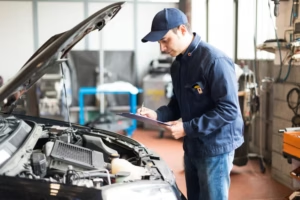
Remote inspection checklist
- Identity numbers match the documents
- Recent photos cover every exterior and interior area
- Cold start and dashboard are shown
- Known damage is photographed closely
- Service and mileage evidence is reviewed
- Shipping-condition requirements are confirmed
- Independent inspection is considered where appropriate
Start with transparent vehicle information
See available vehicles in the FatCar stocklist and request additional vehicle details for your destination.
A remote review reduces uncertainty but cannot guarantee future reliability. Buyers should budget for maintenance appropriate to the vehicle’s age and condition.